
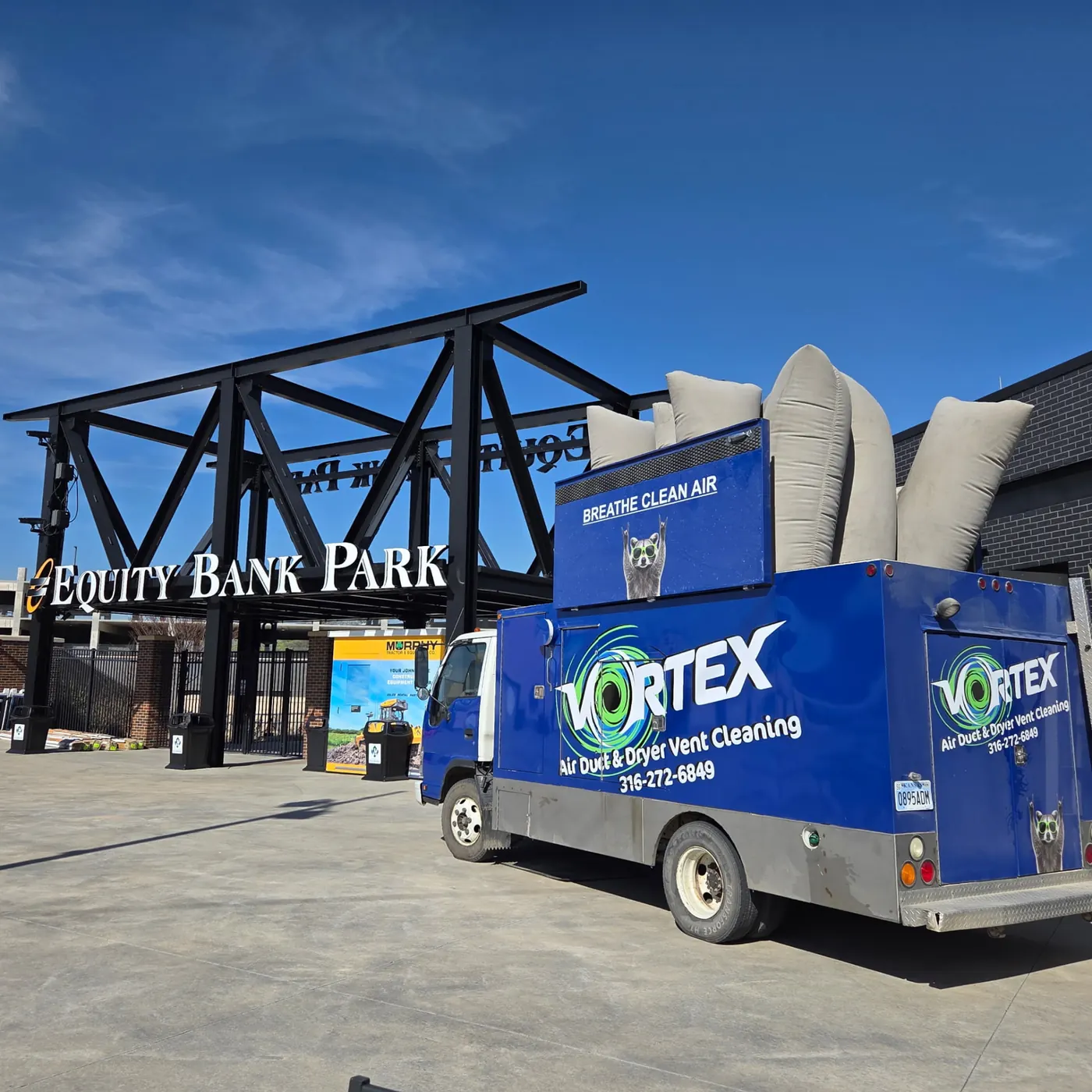
Truck-mounted air duct cleaning generally provides far more suction capacity than portable equipment. Vortex uses a system capable of pulling up to 16,000 CFM (cubic feet of air per minute), creating the negative pressure needed to collect loosened dust and debris instead of allowing it to settle elsewhere in the ductwork or home.
A vent cover can look clean while pounds of dust, pet hair, drywall debris, and other buildup remain deeper in the HVAC system. The difference between a surface-level cleaning and a thorough cleaning often comes down to what is happening at the other end of the hose.
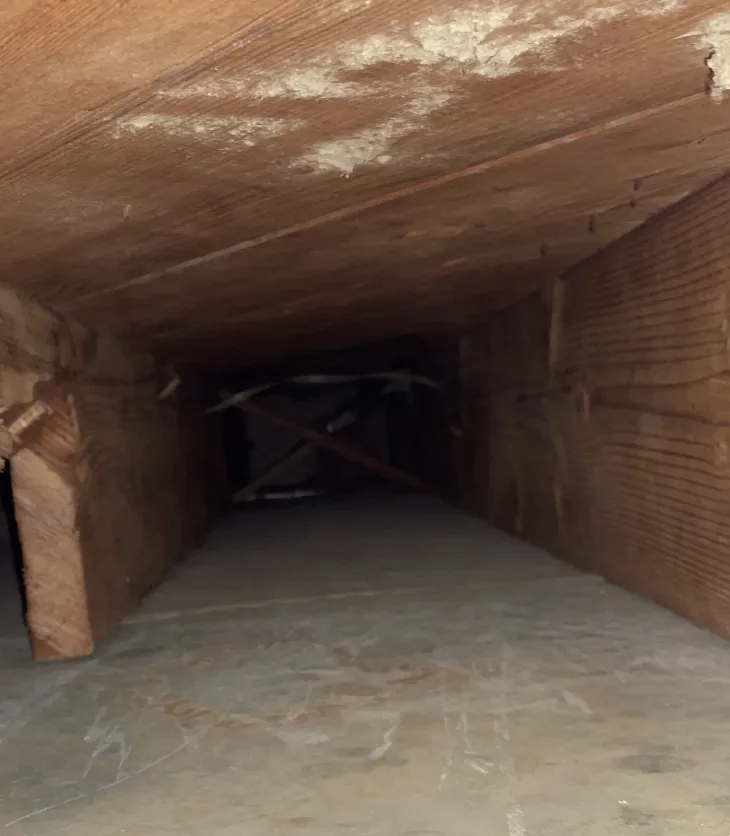
At Vortex, we use powerful truck-mounted equipment because agitation alone is not enough. Once buildup is loosened, the vacuum system must have the airflow to carry it out of the duct system and into a collection unit. Our before-and-after photos show that difference: the first image reveals heavy contamination inside the duct, while the second shows the cleaned metal surface after service.
Why Suction Power Matters in Air Duct Cleaning
Professional air duct cleaning is a source-removal process. Dust is not supposed to be pushed from one part of the system to another. It should be loosened, captured, and removed from the home.
That requires two actions working together:
- Specialized tools disturb debris attached to the walls and corners of the ductwork.
- A high-powered collection system keeps the ductwork under negative pressure and pulls the loosened material toward the vacuum.
The National Air Duct Cleaners Association's explanation of proper cleaning methods describes this source-removal approach: the HVAC system is placed under negative pressure while mechanical agitation dislodges contamination. If the collection equipment cannot maintain enough airflow, debris may not travel all the way to the collector.
CFM means cubic feet per minute. It measures airflow volume, not cleaning quality by itself. Hose length, duct layout, static pressure, seals, technician technique, and the agitation tools also affect the result. Still, available airflow is a major part of the equation. Vortex's truck-mounted system is capable of moving up to 16,000 CFM, giving our technicians substantial collection power for a whole-home duct system.
How Source Removal Works, Step by Step
-
01
Loosen debris
Specialized agitation tools disturb dust and buildup attached to the walls and corners of the ductwork.
-
02
Maintain negative pressure
The duct system is held at a lower pressure than the surrounding air so material moves toward the hose.
-
03
Pull debris through the ductwork
Airflow carries the loosened material down the supply and return runs toward the collection hose.
-
04
Collect it outside the home
Debris ends up in the truck-mounted collection unit parked outside instead of settling somewhere else inside.
UP TO 16,000 CFM
Truck-mounted suction designed to collect loosened debris from the HVAC system.
CFM measures airflow capacity at the equipment. Actual performance also depends on the duct layout, hose setup, sealing, agitation tools, and technician technique.
Truck-Mounted vs. Portable Duct Cleaning at a Glance
Portable equipment has legitimate uses. It may be necessary in apartments, high-rise buildings, tight-access properties, or locations where a truck cannot get close enough to the HVAC system. But when a home can be serviced with a high-capacity truck-mounted system, the extra airflow can improve the ability to transport loosened debris out of long duct runs.
| Comparison point | Vortex truck-mounted system | Typical portable equipment |
|---|---|---|
| Maximum airflow | Up to 16,000 CFM at the equipment | Varies widely by machine |
| Equipment location | Main collection unit stays outside in the truck | Collection unit is carried inside |
| Debris destination | Pulled through the hose to an outdoor collection unit | Captured in filters or a collection unit inside or near the home |
| Whole-system negative pressure | Built for high-volume residential duct systems | Depends heavily on unit capacity and system layout |
| Long or complex duct runs | High airflow offers greater debris-carrying capacity | Performance may decline across long runs, depending on setup |
| Indoor equipment footprint | Primarily hoses and cleaning tools enter the home | Vacuum unit and accessories enter the property |
| Best fit | Accessible homes needing full-system source removal | Restricted-access sites or smaller, targeted jobs |
| Verification | Vortex documents results with before-and-after photos | Depends on the contractor's process |
-
Maximum airflow
Vortex truck-mounted system
Up to 16,000 CFM at the equipment
Typical portable equipment
Varies widely by machine
-
Equipment location
Vortex truck-mounted system
Main collection unit stays outside in the truck
Typical portable equipment
Collection unit is carried inside
-
Debris destination
Vortex truck-mounted system
Pulled through the hose to an outdoor collection unit
Typical portable equipment
Captured in filters or a collection unit inside or near the home
-
Whole-system negative pressure
Vortex truck-mounted system
Built for high-volume residential duct systems
Typical portable equipment
Depends heavily on unit capacity and system layout
-
Long or complex duct runs
Vortex truck-mounted system
High airflow offers greater debris-carrying capacity
Typical portable equipment
Performance may decline across long runs, depending on setup
-
Indoor equipment footprint
Vortex truck-mounted system
Primarily hoses and cleaning tools enter the home
Typical portable equipment
Vacuum unit and accessories enter the property
-
Best fit
Vortex truck-mounted system
Accessible homes needing full-system source removal
Typical portable equipment
Restricted-access sites or smaller, targeted jobs
-
Verification
Vortex truck-mounted system
Vortex documents results with before-and-after photos
Typical portable equipment
Depends on the contractor's process
The label on the machine does not replace good workmanship. A truck-mounted vacuum connected poorly will not deliver its rated airflow throughout the duct system. A skilled contractor should create effective access points, seal registers as needed, clean supply and return sides, use appropriate agitation tools, and verify the work.
"If loosened dust is not captured and carried out of the system, the job is not finished."
What Negative Pressure Does During Cleaning
Negative pressure means the air pressure inside the duct system is lower than the surrounding air. Air and suspended debris therefore move toward the collection hose rather than drifting out through open registers.
Think of brushing dirt from the inside of a long pipe. The brush can break the dirt loose, but something still has to carry it out. In duct cleaning, the vacuum airflow is that transport system. Strong, properly managed negative pressure helps move fine dust and heavier debris toward the collector while technicians work through the vents and trunk lines.
This is why homeowners should look beyond phrases such as "whole-house duct cleaning." The scope and equipment matter. Ask where the debris goes, how the contractor creates negative pressure, whether both supply and return ductwork are included, and how the finished work is verified.
The EPA's consumer guidance on air duct cleaning advises homeowners to make sure a provider agrees to clean all components of the system and is qualified to do so. The agency also cautions against sweeping claims that duct cleaning will prevent health problems or always improve efficiency. Vortex focuses on what can be shown: visible buildup, a defined source-removal process, and photographic documentation of the cleaned areas.
What Vortex's Before-and-After Photos Show
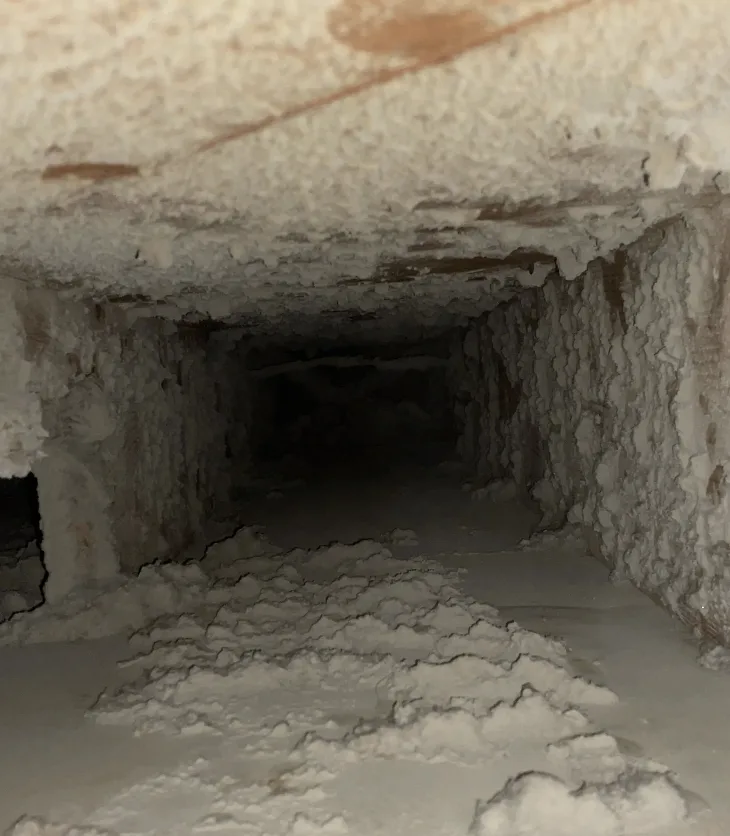
The "before" photo supplied for this article shows more than a light gray film. Dust coats the duct surface, and larger pieces of debris are sitting in the bottom of the run. Material like this has to be loosened and transported out; cleaning only what is visible from the register will not reach it.
The "after" photo shows the same kind of interior surface with the buildup removed and the metal visible again. Photos matter because homeowners cannot inspect most of their ductwork from the living space. Documentation provides a practical way to judge whether the service reached beyond the vent opening.
An EPA field study of nine residential HVAC systems found that mechanical cleaning effectively removed dust and debris from duct surfaces. Average post-cleaning dust across 58 supply-and-return samples was 0.43 grams per square meter. The study also reported increased supply airflow of 4% to 32% in eight homes, while noting that the small sample could not establish broad energy or indoor-air-quality conclusions.
That distinction is important. A proper cleaning can remove visible contamination from duct surfaces, but no responsible company should promise that duct cleaning will cure allergies, eliminate every indoor-air problem, or produce a specific energy saving.
Why a Thorough Cleaning May Last Longer
Vortex generally recommends professional air duct cleaning every four to five years under normal household conditions. That is a service recommendation, not a guarantee. Homes with active remodeling, indoor smoking, many shedding pets, pest contamination, water damage, or ongoing filtration problems may need attention sooner.
The starting point matters. If a cleaning removes only the material near the registers or moves debris deeper into the system, the homeowner may notice dust again sooner. A complete source-removal service aims to clean the accessible HVAC system thoroughly so the customer is not paying every year for the same incomplete job. It also helps to understand what professional duct cleaning costs and what low-price duct cleaning may leave behind before you compare quotes.
Routine filter changes remain essential after cleaning. Duct cleaning does not replace filtration, HVAC maintenance, moisture control, or housekeeping. The EPA notes that preventing ducts from becoming wet is one of the most effective ways to avoid biological growth. If moisture or suspected mold is present, the cause must be identified and corrected rather than covered up with a cleaning alone. Homeowners with indoor air quality concerns can start there.
Vortex's four-to-five-year guidance assumes the system is functioning normally and the homeowner maintains the correct filter. We evaluate the property instead of treating every house as identical. The same logic applies to dryer vent cleaning, where buildup also has to be carried out rather than pushed further along.
When Portable Equipment Can Be the Right Choice
Portable equipment is not automatically ineffective. A capable portable negative-air machine, paired with proper agitation and used by a trained technician, can clean ductwork. It may be the practical option when:
- The property is several floors above ground level.
- Parking or hose access prevents a truck connection.
- The work involves a limited section rather than an entire system.
- Building rules restrict large exterior hoses or truck operation.
The problem is not that a machine has wheels and can be carried indoors. The concern is whether the complete setup can maintain adequate negative pressure, capture debris, reach the entire system, and produce a verifiable result.
This is also why Vortex does not tell homeowners to hire based on CFM alone. Published CFM is measured at the equipment, and actual airflow at the duct changes with hose size, hose length, restrictions, leakage, and system configuration. Equipment capacity gives the technician more to work with, but technique determines how effectively that capacity is used.
Questions to Ask Before Hiring a Duct Cleaner
Use these four questions to compare estimates:
-
1
What vacuum system will you use at my home?
Ask whether it is truck-mounted or portable and request the equipment's airflow rating. “Powerful vacuum” is not a specification.
-
2
How will you maintain negative pressure?
The contractor should be able to explain how registers are prepared, where the main hose connects, and how debris is directed toward the collection unit.
-
3
What parts of the HVAC system are included?
Confirm whether the price covers supply ducts, return ducts, trunk lines, registers, grilles, and accessible components. A very low advertised price may cover less than you expect.
-
4
Will you provide visual verification?
Ask for before-and-after photos from inside the ductwork, not only pictures of clean vent covers.
NADCA's 2025 ACR Standard announcement reinforces the value of defined inspection, cleaning, and restoration practices. A trustworthy company should be willing to explain its process in plain language before work begins.
Choose Duct Cleaning You Can Verify
Vortex uses truck-mounted suction, professional agitation tools, whole-system cleaning, and before-and-after documentation so homeowners can see the difference.
Schedule air duct cleaning in Wichita or call 316-272-6849 to discuss your home, vent count, HVAC layout, and service options.
Frequently Asked Questions
Is truck-mounted duct cleaning better than portable duct cleaning?+
Truck-mounted equipment generally offers greater airflow and collection capacity, which can help maintain negative pressure across a residential HVAC system. Portable equipment can still be appropriate in restricted-access properties when it is correctly sized and paired with proper agitation.
How much suction does Vortex's duct-cleaning system have?+
Vortex uses a truck-mounted system capable of pulling up to 16,000 cubic feet of air per minute at the equipment. Actual airflow within a home's ductwork depends on hose length, connections, seals, restrictions, and duct layout.
Does a portable vacuum blow dust back into the house?+
A properly configured portable negative-air machine should capture debris through adequate filtration. Problems can occur with undersized equipment, poor sealing, weak collection, or methods that agitate debris without maintaining effective negative pressure; homeowners should ask how debris is contained and where exhaust air goes.
How often should air ducts be cleaned?+
Vortex generally recommends cleaning every four to five years under normal conditions. Remodeling dust, water damage, pest activity, indoor smoking, heavy pet shedding, or filtration problems may justify an earlier inspection or cleaning.
Should I choose a duct cleaner based only on CFM?+
No. CFM is important, but equipment capacity must be paired with the right hose setup, access points, agitation tools, system preparation, and technician technique. Ask for a complete process explanation and before-and-after verification.
Does duct cleaning improve indoor air quality?+
Duct cleaning removes accumulated material from HVAC surfaces, but the EPA says evidence is not sufficient to promise that cleaning will prevent health problems or consistently change airborne particle levels. Indoor air quality also depends on outdoor air, moisture, filtration, pets, occupant activity, and other sources.
More homeowner guides are on the Vortex blog.
